




Legality Verdict
Short-term rentals are legal in Philadelphia with a robust licensing and zoning regime. Both primary-residence and non-primary STRs are allowed, but non-primary units face strict zoning limits. The city enforces a high tax stack and annual renewal.
- Legality Status: 4/5
- License Availability: 4/5
- Compliance Cost (% revenue): 2/5
- Regulatory Stability: 3/5
- Enforcement Climate: 2/5
TL;DR
Philadelphia defines STRs as rentals under 30 days and requires a Zoning Permit plus either a Limited Lodging Operator License (primary residence) or Rental License (non-primary). The total lodging tax is 15.5%. Non-primary STRs are only allowed in select commercial/mixed-use zones. The biggest investor risk: strict enforcement and a high tax stack.
Quick Facts
| Item | Detail |
|---|---|
| STR Definition | Rental of a dwelling unit for less than 30 consecutive days City of Philadelphia Zoning Code FAQ (2025) |
| Registration Required | Yes — Zoning Permit plus Limited Lodging Operator License or Rental License City of Philadelphia Zoning Code FAQ (2025) |
| Permit Cost | [needs verification — call Department of Licenses and Inspections (L&I) at (215) 686-8686 or https://www.phila.gov/departments/department-of-licenses-and-inspections/licenses/rental-and-property-licenses/] |
| Annual Renewal | Yes — annual renewal required for Limited Lodging Operator License City of Philadelphia Zoning Code FAQ (2025) |
| Late Penalty | 1.5% of license fee per month after 30-day grace period Philadelphia Zoning (Rental Licenses) |
| State Hotel Occupancy Tax | 6% PA Department of Revenue FAQ |
| County Hotel Occupancy Tax | 1% PA Department of Revenue FAQ |
| City Hotel Tax | 8.5% City of Philadelphia Hotel Tax |
| Total Effective Lodging Tax | 15.5% (6% state + 1% county + 8.5% city) City of Philadelphia Hotel Tax |
| Sales, Use, and Hotel Occupancy Retail Tax License | Required from PA Dept. of Revenue PA Department of Revenue Sales, Use and Hotel Occupancy Tax |
| License Cap | Not codified — no citywide cap on STR licenses City of Philadelphia Zoning Code FAQ (2025) |
| Transferability | Not codified — transferability not addressed in available sources City of Philadelphia Zoning Code FAQ (2025) |
| Permitted Zones | Limited Lodging: most residential zones (primary residence); Visitor Accommodation: only CMX-3, CMX-4, CMX-5, CA-1, CA-2, RMX-1, RMX-2 City of Philadelphia Department of Commerce |
| Prohibited Zones | Visitor Accommodation prohibited in lower-density residential zones City of Philadelphia Department of Commerce |
| Primary Residence Rule | Yes — Limited Lodging requires operator to reside in unit >50% of year City of Philadelphia Zoning Code FAQ (2025) |
| Inspection Requirement | Yes — inspection required for Limited Lodging Operator License issuance and renewal City of Philadelphia Zoning Code FAQ (2025) |
| Occupancy Cap | Not codified — no separate city rule identified City of Philadelphia Zoning Code FAQ (2025) |
| Minimum Night Stay | Not codified — no separate city rule identified City of Philadelphia Zoning Code FAQ (2025) |
| Parking Requirement | Not codified — no separate city rule identified City of Philadelphia Zoning Code FAQ (2025) |
| Density Limit | Not codified — no separate city rule identified City of Philadelphia Zoning Code FAQ (2025) |
| HOA/Condo Override | Yes — HOA/condo rules may restrict STRs FirstService Residential (HOA management) |
| Local Contact Requirement | Yes — non-resident landlords must designate a local agent City of Philadelphia Code of Ordinances § 9-3902 |
| Enforcement Penalties | [needs verification — call Department of Licenses and Inspections (L&I) at (215) 686-8686 or https://www.phila.gov/departments/department-of-licenses-and-inspections/licenses/rental-and-property-licenses/] |
| Primary Regulator | Department of Licenses and Inspections (L&I), (215) 686-8686 [Rental and property licenses |
| Last Updated | June 11, 2026 |
Regulatory Impact Snapshot
Philadelphia’s STR regime is defined by a high compliance cost and strict zoning. The total lodging tax stack is 15.5%, among the highest in the region. Annual license renewal and mandatory inspections add friction, especially for non-primary units, which are only allowed in select commercial/mixed-use zones. Underwriters should model compliance costs at 15.5% of gross revenue, with median Philadelphia STRs earning $22,727 at an average daily rate of $132 and 44% occupancy. The binding constraint is the combination of zoning restrictions and the high tax burden, which can materially impact net yields. Run this market in our Airbnb Calculator →
Top 500 US Airbnb Rental Markets - 2026
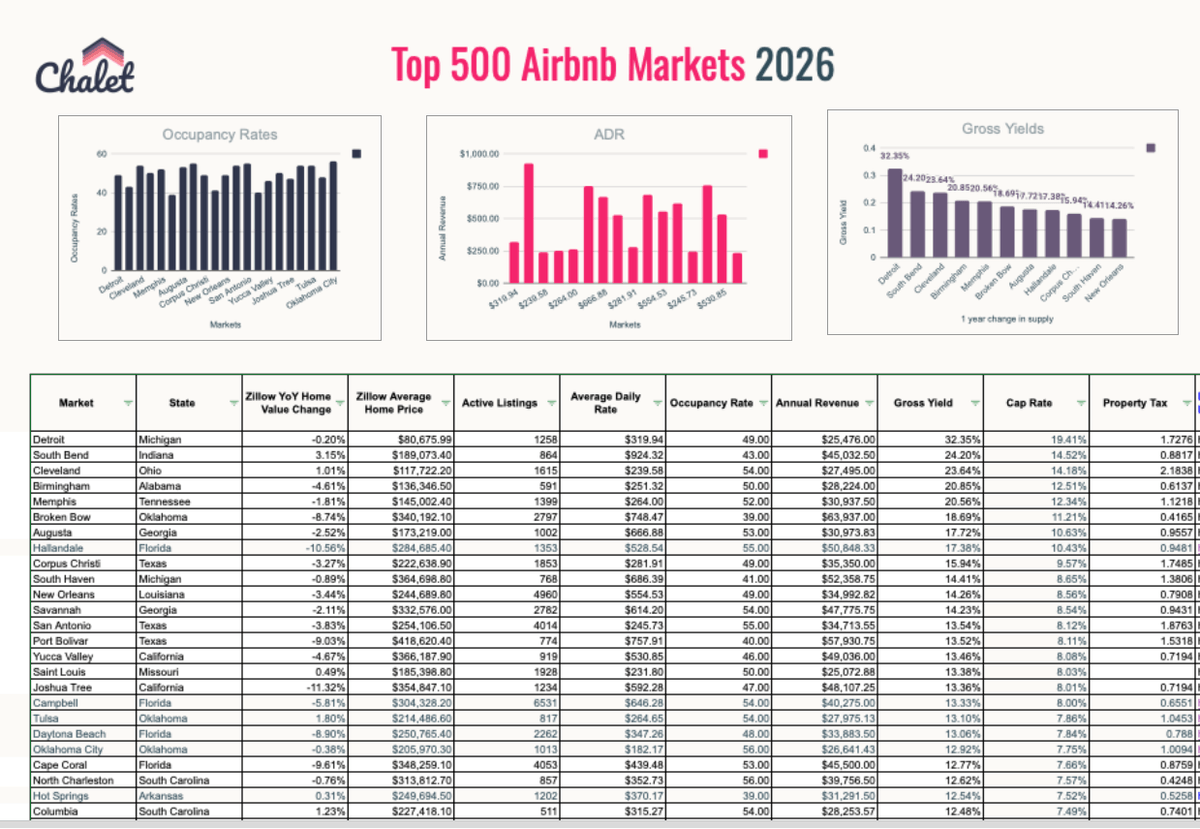
Instantly compare top 500 short-term (Airbnb) rental markets in the US
Frequently Asked Questions
Basics
What is considered a short-term rental in Philadelphia?
A short-term rental is defined as renting a dwelling unit for less than 30 consecutive days City of Philadelphia Zoning Code FAQ (2025).
Are short-term rentals legal in Philadelphia?
Yes, STRs are legal if you comply with licensing, zoning, and tax requirements The Short-Term Rental Industry in Pennsylvania A Staff Study March 2025.
Does Philadelphia have its own STR ordinance?
Yes, Philadelphia enforces its own STR ordinance effective January 1, 2023 The Short-Term Rental Industry in Pennsylvania A Staff Study March 2025.
Licensing
What licenses are required to operate an STR in Philadelphia?
You need a Zoning Permit and either a Limited Lodging Operator License (primary residence) or Rental License (non-primary) City of Philadelphia Zoning Code FAQ (2025).
Is there a cap on the number of STR licenses?
No, Philadelphia does not codify a citywide cap on STR licenses City of Philadelphia Zoning Code FAQ (2025).
Are STR licenses transferable to new owners?
Transferability is not codified in available sources City of Philadelphia Zoning Code FAQ (2025).
Is annual renewal required?
Yes, the Limited Lodging Operator License must be renewed annually City of Philadelphia Zoning Code FAQ (2025).
Taxes
What is the total lodging tax rate for STRs in Philadelphia?
The total effective lodging tax is 15.5% (6% state, 1% county, 8.5% city) City of Philadelphia Hotel Tax.
Does Airbnb collect and remit taxes in Philadelphia?
Airbnb collects and remits the state (6%), county (1%), and city (8.5%) occupancy taxes for stays of 29 nights or less Airbnb Help Center.
Do I need a state tax license?
Yes, a Sales, Use, and Hotel Occupancy Retail Tax License from the PA Department of Revenue is required PA Department of Revenue Sales, Use and Hotel Occupancy Tax.
Operations
Where are non-primary STRs allowed?
Non-primary STRs (Visitor Accommodation) are only permitted in CMX-3, CMX-4, CMX-5, CA-1, CA-2, RMX-1, and RMX-2 zones City of Philadelphia Department of Commerce.
Is there a primary residence requirement?
Yes, Limited Lodging STRs require the operator to reside in the unit for more than half the year City of Philadelphia Zoning Code FAQ (2025).
Are inspections required?
Yes, an inspection is required for both issuance and renewal of the Limited Lodging Operator License City of Philadelphia Zoning Code FAQ (2025).
Can HOAs or condos restrict STRs?
Yes, HOA or condo association rules may restrict or prohibit STRs FirstService Residential (HOA management).
Enforcement
What are the penalties for operating without a license?
[needs verification — call Department of Licenses and Inspections (L&I) at (215) 686-8686 or https://www.phila.gov/departments/department-of-licenses-and-inspections/licenses/rental-and-property-licenses/]
How strict is enforcement?
Philadelphia’s enforcement is strict, with significant fines and a formal appeals process for violations Steadily.com.
Is there active rulemaking or pending legislation?
Yes, as of March 2026, a statewide STR registration bill is under committee review, and City Council is considering further tenant protections StaySTRA.com, Bay Property Management Group.
Permit Process
Philadelphia requires all STR operators to obtain a Zoning Permit and either a Limited Lodging Operator License (for primary residences) or a Rental License (for non-primary units). The Commercial Activity License is also required but is free and does not expire. The Limited Lodging Operator License must be renewed annually and requires a scheduled inspection with the Department of Licenses and Inspections (L&I) for both issuance and renewal. Non-resident landlords must designate a local agent with a Philadelphia mailing address.
Zoning
STRs in Philadelphia are divided into Limited Lodging (primary residence) and Visitor Accommodation (non-primary). Limited Lodging is permitted as an accessory use in most residential zones, but operators must reside in the unit for more than half the year. Visitor Accommodation is only allowed in specific commercial and mixed-use zones: CMX-3, CMX-4, CMX-5, CA-1, CA-2, RMX-1, and RMX-2. Overlay districts and Councilmanic District rules may impose additional restrictions.
Taxes and Remittance
Philadelphia imposes a combined lodging tax of 15.5% on STRs: 6% state hotel occupancy tax, 1% county hotel occupancy tax, and 8.5% city hotel tax. Airbnb collects and remits these taxes for stays of 29 nights or less. Hosts must also obtain a Sales, Use, and Hotel Occupancy Retail Tax License from the Pennsylvania Department of Revenue. Hosts are responsible for any additional tax obligations not collected by platforms.
Enforcement and Recent Actions
Philadelphia enforces STR regulations strictly, with significant fines for non-compliance. All STRs must maintain a valid license; operating without one risks penalties and legal complications. If a license expires, a late fee of 1.5% per month is assessed after a 30-day grace period. Operators have the right to appeal violation notices through a structured process.
Recent Changes and Pending Legislation
Philadelphia’s STR ordinance took effect January 1, 2023, and enforcement has tightened since. In 2025–2026, City Council expanded tenant protections and is considering further changes to rental licensing and eviction rules. At the state level, H.B. 2303 proposes a statewide STR registry but does not preempt local authority. Investors should monitor for additional rule changes in 2026.
Comparable Markets
- Pittsburgh, PA — Consider if seeking a Pennsylvania market with lower tax stack and less restrictive zoning.
- Baltimore, MD — Consider for a major East Coast city with a different STR licensing regime.
- Jersey City, NJ — Consider for a Northeast urban market with strict primary residence rules.
- Washington, DC — Consider for a capital city with robust STR enforcement and annual licensing.
Sources
- City of Philadelphia Zoning Code FAQ (2025)
- City of Philadelphia Hotel Tax
- PA Department of Revenue FAQ
- PA Department of Revenue Sales, Use and Hotel Occupancy Tax
- Rental and property licenses | Department of Licenses and Inspections | City of Philadelphia
- Philadelphia Zoning (Rental Licenses)
- City of Philadelphia Department of Commerce
- City of Philadelphia Code of Ordinances § 9-3902
- The Short-Term Rental Industry in Pennsylvania A Staff Study March 2025
- Airbnb Help Center
- FirstService Residential (HOA management)
- Steadily.com
- StaySTRA.com
- Bay Property Management Group
- RNBPhilly.com
- WHYY
This page is research, not legal advice. Consult local counsel before acquiring or operating a short-term rental in City of Philadelphia (coterminous with Philadelphia County), Pennsylvania.
Ready to evaluate Philadelphia as an STR market?
- See Philadelphia revenue data → — Get live median revenue, ADR, and occupancy for Philadelphia STRs.
- Run this deal in our calculator → — Model cash flow and compliance costs for any Philadelphia property.
- Match with a Philadelphia STR agent → — Connect with a local expert for on-the-ground guidance.